
Backyard and front yard soccer pitches
Build a pitch your kids will pick over the console.
We turn your back or front yard into a real mini soccer field with turf, rebound walls, netting and field lines. More hours outside for your kids, safely inside your own yard, and fewer drives across town to extra training.
2v2 to 7v7 layouts
3 wall options
Netting and field lines
Driveways and odd-shaped yards
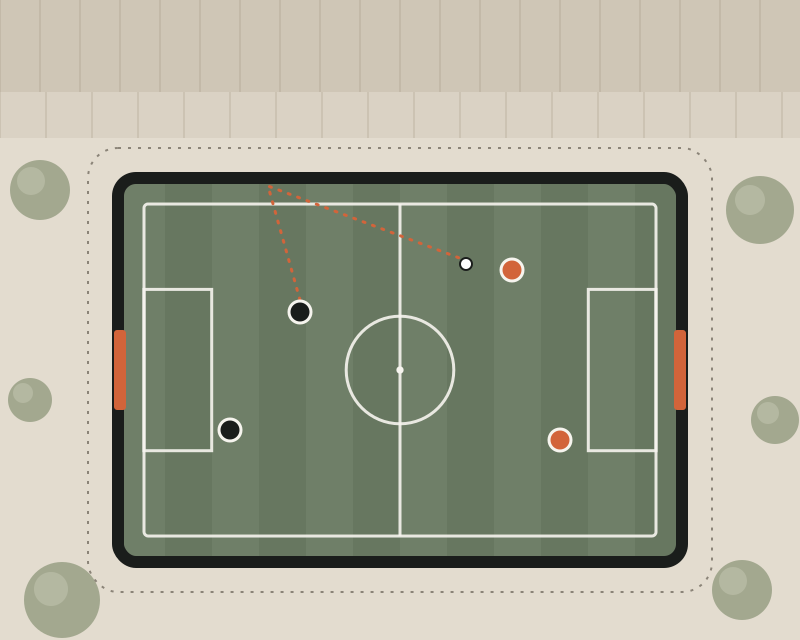
Ball stays in
Fits odd yards
More touches ✦ Ball stays in ✦ Driveway pitches ✦ Odd-shaped yards ✦ 2v2 to 7v7 ✦ Less screen time ✦ Safe in your own yard ✦ Fewer drives to practice ✦ Lights and scoreboards ✦ Wiffle ball to lacrosse ✦ Wall passes all day ✦ More touches ✦ Ball stays in ✦ Driveway pitches ✦ Odd-shaped yards ✦ 2v2 to 7v7 ✦ Less screen time ✦ Safe in your own yard ✦ Fewer drives to practice ✦ Lights and scoreboards ✦ Wiffle ball to lacrosse ✦ Wall passes all day ✦
Why it works
Screens are built to keep kids hooked. A good pitch is too.
Video games win because they give instant feedback, constant reps and a reason to come back tomorrow. A well built backyard field does the same thing, just outside and on their feet.
01
Instant feedback
Rebound walls send every pass straight back. No chasing the ball into the bushes and no waiting around for the next turn.
02
More touches
With walls keeping the ball in play, kids get far more first touches, passes and shots in 30 minutes than they would on open grass.
03
Levels to beat
Start with wall passes, move up to 1v1 moves, then 2v2 games. There’s always a next challenge to unlock.
04
Multiplayer
Siblings, neighbors and teammates show up. Your yard becomes the place where the pickup game happens.
Walls change the game
The ball stays in. That changes everything.
On open grass, half of playtime is chasing the ball, usually into the rose bushes. Put walls around the field and every kick stays in play. That’s the single biggest upgrade you can make to a backyard pitch.
On the ball
Player development
Way more touches
Small space plus a ball that never leaves means kids are on the ball constantly. More touches is how close control and dribbling get good.
Tight-space duels
Walls squeeze the game into constant 1v1 and 2v2 battles. Kids learn to shield, turn and find space under pressure.
Instant feedback
The ball comes right back off the wall, so a mistake turns into a counterattack in a second. Reactions and decisions get faster.
The wall is a teammate
Kids learn to play a pass off the wall to get around a defender, the same give-and-go idea they’ll use with real teammates.
Off the couch
Why kids love it
Non-stop action
No throw-ins, goal kicks or corners. The game doesn’t stop, so energy stays high from the first kick to the last.
Goals, goals, goals
Small enclosed games produce a ton of shots. Scoring and saving over and over is what keeps kids coming back.
Zero ball chasing
No more battles with the rose bushes to get the ball back, no more knocking on the neighbor’s door, and far fewer balls in the street. Add netting and even more of them stay in.
How they do it in England and Europe
Small spaces, walls all around, lots of touches.
- England’s FA pitch guidance says enclosed small-sided pitches should use rebound boards at least 1.2 m (about 4 ft) high. FA guide
- Starting with the 2026-27 season, the FA is moving under-7s to 3v3 so young players get more time on the ball. England Football
- Germany’s federation built more than 1,000 enclosed mini-pitches with perimeter barriers and nets behind the goals. Polytan
That’s the same idea we bring to your yard, scaled to the space you have.
How we build it
More than turf. A real field, built in levels.
Every project starts with a properly built turf surface. From there you add the pieces that fit your yard, your kids and your budget.
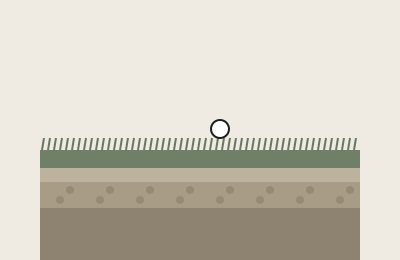
Level 1 · Included
Soccer-grade turf, built like a field
Site prep, grading, a compacted and draining base, then turf picked for true ball roll and quick footwork. This is a playing surface, not a lawn replacement.
Level 2 · Choose your walls
Three wall options, one for every yard
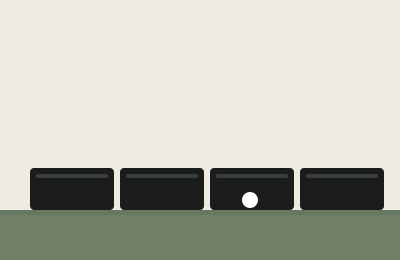
Option A
Rebound boards
Low boards around the edge that keep the ball on the field and return ground passes. A clean, low profile look for front yards and smaller spaces.
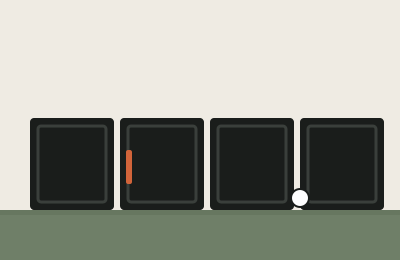
Option B
Panel walls
Taller rebound panels made for real wall training. Kids can pass, receive and shoot on their own for as long as they want.
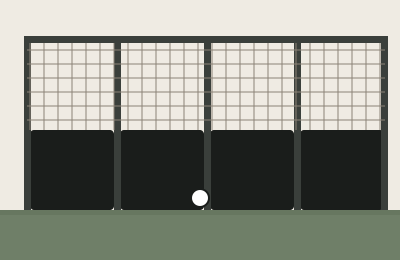
Option C
Cage walls
Panels plus posts and overhead netting for a fully enclosed mini pitch. The closest thing to a pro cage you can put in a yard.
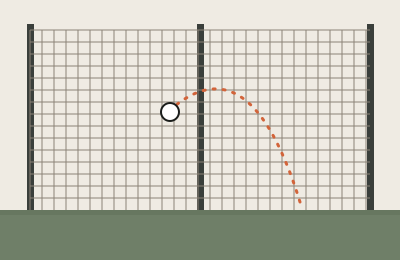
Level 3 · Optional
Ball-stop netting
Netting on posts behind the goals or around the field keeps more balls in play. Fewer balls in the street, and fewer knocks on the neighbor’s door to ask for yours back.
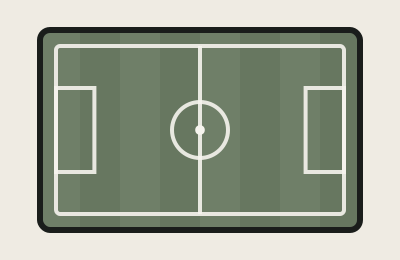
Level 4 · Optional
Mini pitch field lining
Touchlines, halfway line, center circle and goal boxes marked into the turf, so it looks and plays like a real mini pitch.
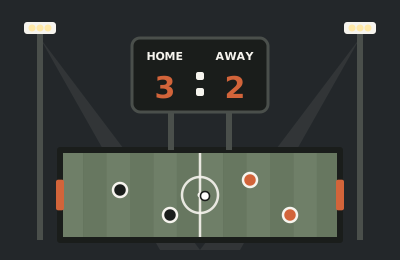
Level 5 · Optional
Lights and scoreboard
Light poles for evening games and a scoreboard so every game counts. The finishing touch on your mini field of dreams.
Dream big
Build your mini field of dreams.
Kids dream big. So do parents. Add lights for evening games after school and a scoreboard so every game counts, and the backyard turns into its own little stadium.
Lights and a scoreboard are optional add-ons, and they can be planned in from the start or added later.
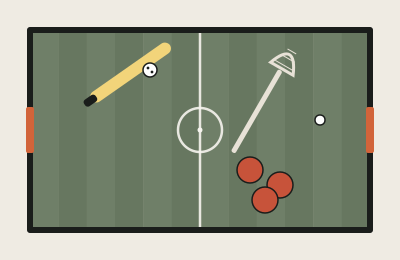
Not just soccer
One pitch, a lot of games.
Wiffle ball
Turf, walls and netting make a great Wiffle ball diamond with built-in home run fences.
Dodgeball
Walls keep every ball in the game, so nobody stops to chase them down.
Lacrosse
Wall ball, passing and shooting drills on a surface that plays the same every day.
Kickball and more
Kickball, tag, relay races and whatever games the kids invent next.
The payback
More hours outside. Fewer hours in the car.
A backyard pitch puts the training ground where your kids already are. They get outside more, and they’re safely inside your own yard where you can keep an eye on them from the kitchen window.
It also cuts down the evenings spent driving across town to extra trainings and private sessions. Spread the cost of the build across those hours and drives, and the yard starts paying you back fast.
180+
hours a year from just 30 minutes a day
200+
hours a year from 4 hours of weekend pickup
0
drives across town to get extra reps in
1
safe place to play, inside your own fence line
Field sizes
What size fits your yard?
Most backyards fit a 2v2 or 3v3 pitch. Bigger lots can go to 5v5 or 7v7. Every diagram is drawn to the same scale.
To scale
Here’s how a pitch fits behind a typical house
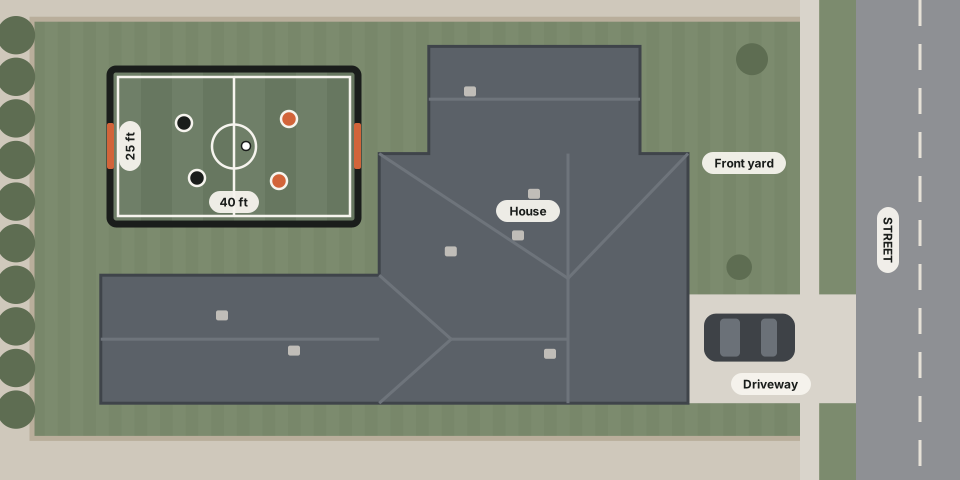
2v2 in the back yard
A 40 × 25 ft pitch with room left over for a patio and a walkway.
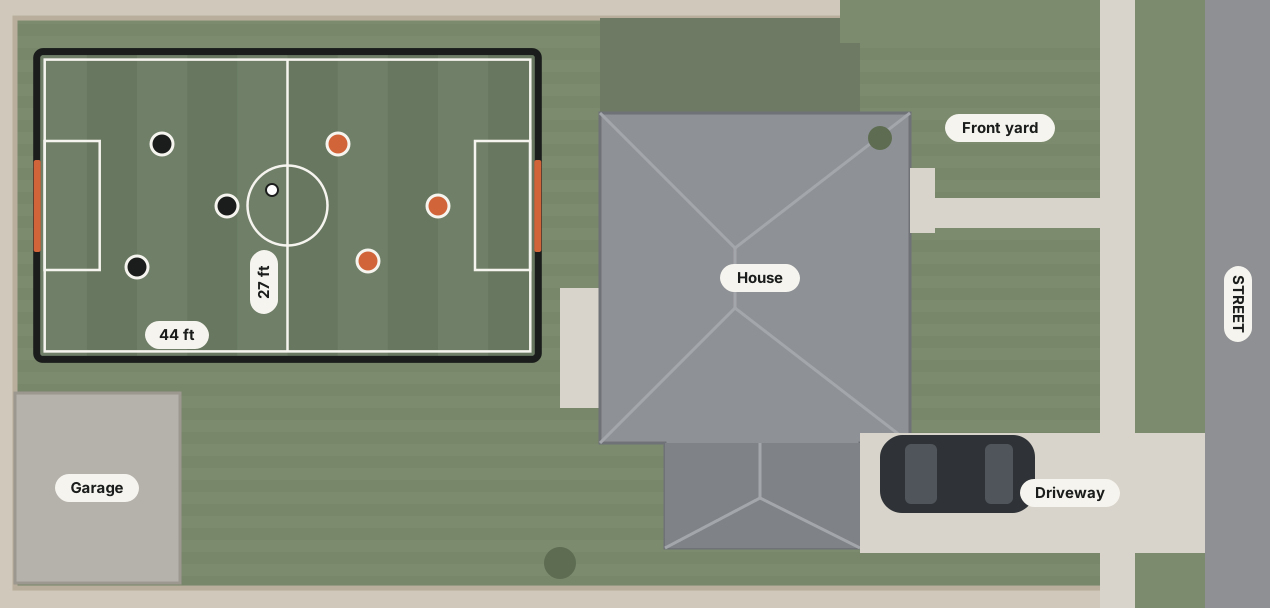
3v3 behind a real house
A 44 × 27 ft pitch fits the back yard of a 50 ft wide lot with open turf all around it, and the garage and patio stay free.
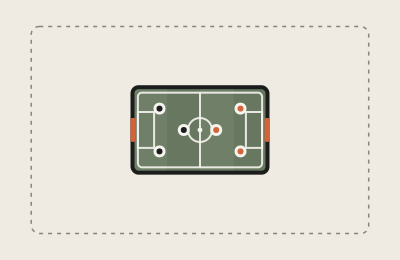
2v2
Ages 4 to 8
About 30 × 20 ft to 40 × 25 ft
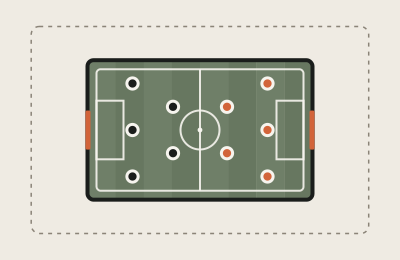
3v3
Ages 6 to 10
About 50 × 30 ft to 60 × 40 ft
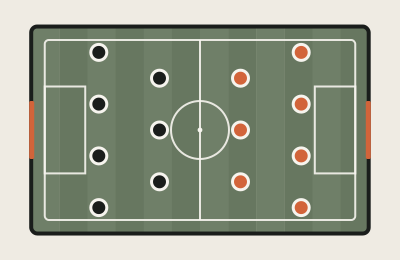
5v5
Ages 8 and up
About 80 × 50 ft to 100 × 65 ft
7v7
Ages 9 to 12
About 120 × 75 ft to 150 × 95 ft
Odd-shaped yards
Your yard isn’t a rectangle. Your pitch doesn’t have to be.
Most yards aren’t perfect squares. We lay out turf, walls and lines to fit the space you actually have, from narrow driveways to tapered lots and angled property lines.
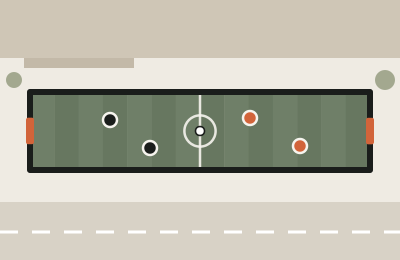
About 60 × 16 ft
Driveway strip
Long and narrow. Perfect for 1v1, dribbling lanes and passing down the length off the side walls.
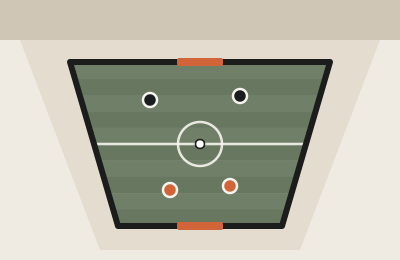
Endlines 40 and 25 ft
Trapezoid yard
Wide by the house, narrow at the back fence. Endlines can be different lengths and it still plays like a real pitch.
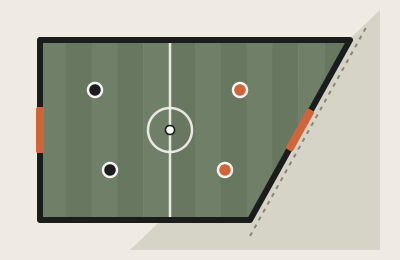
Follows the fence line
Angled property line
One end or side follows a slanted fence or wall. The angled wall turns into another rebound surface.
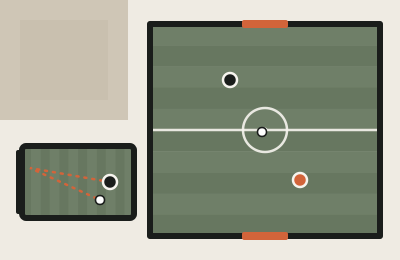
Pitch plus side lane
L-shaped or wraparound
Main pitch in the backyard and a narrow training lane down the side yard with its own rebound wall.
Recent installs
Real fields we’ve built.
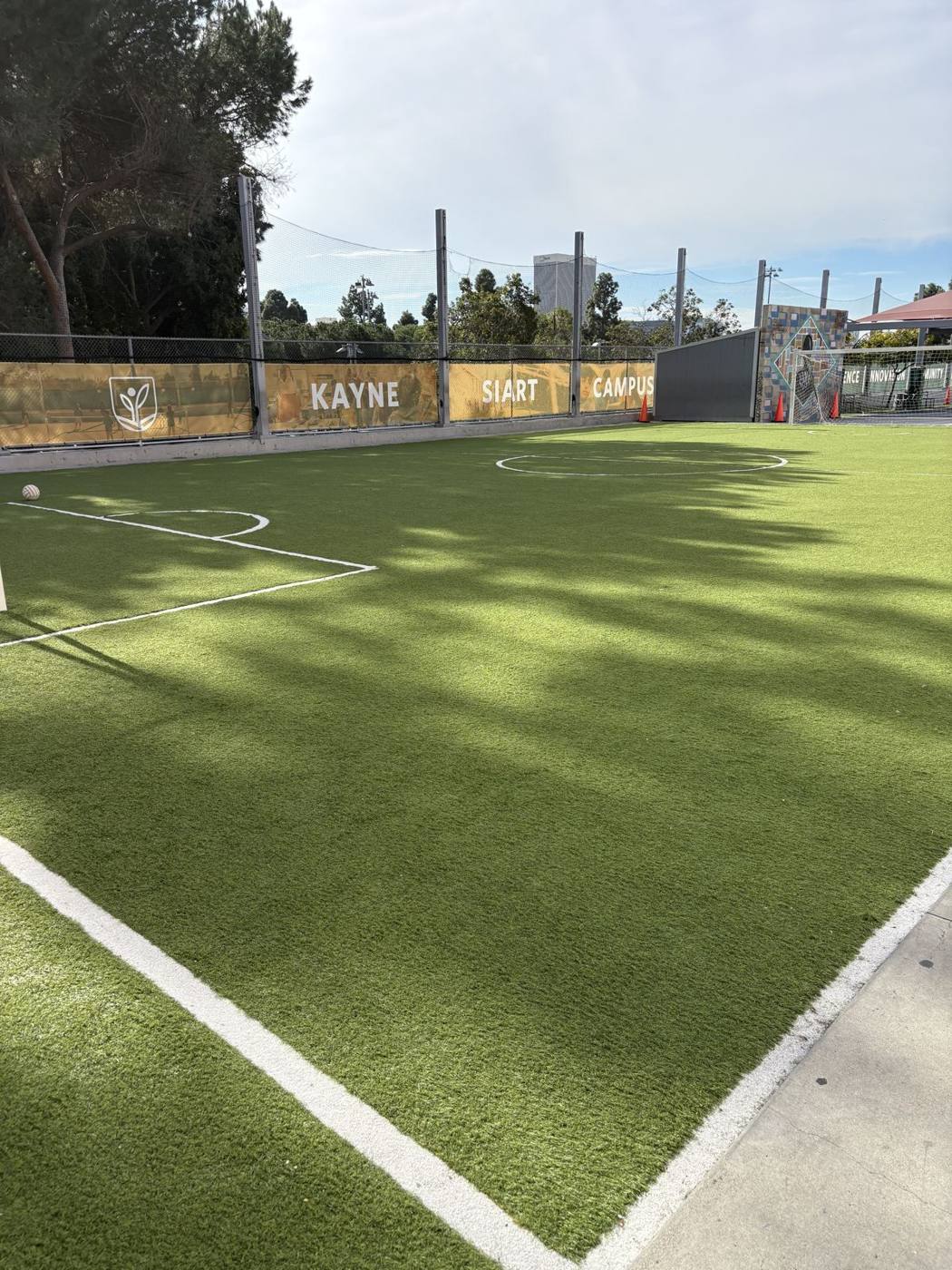
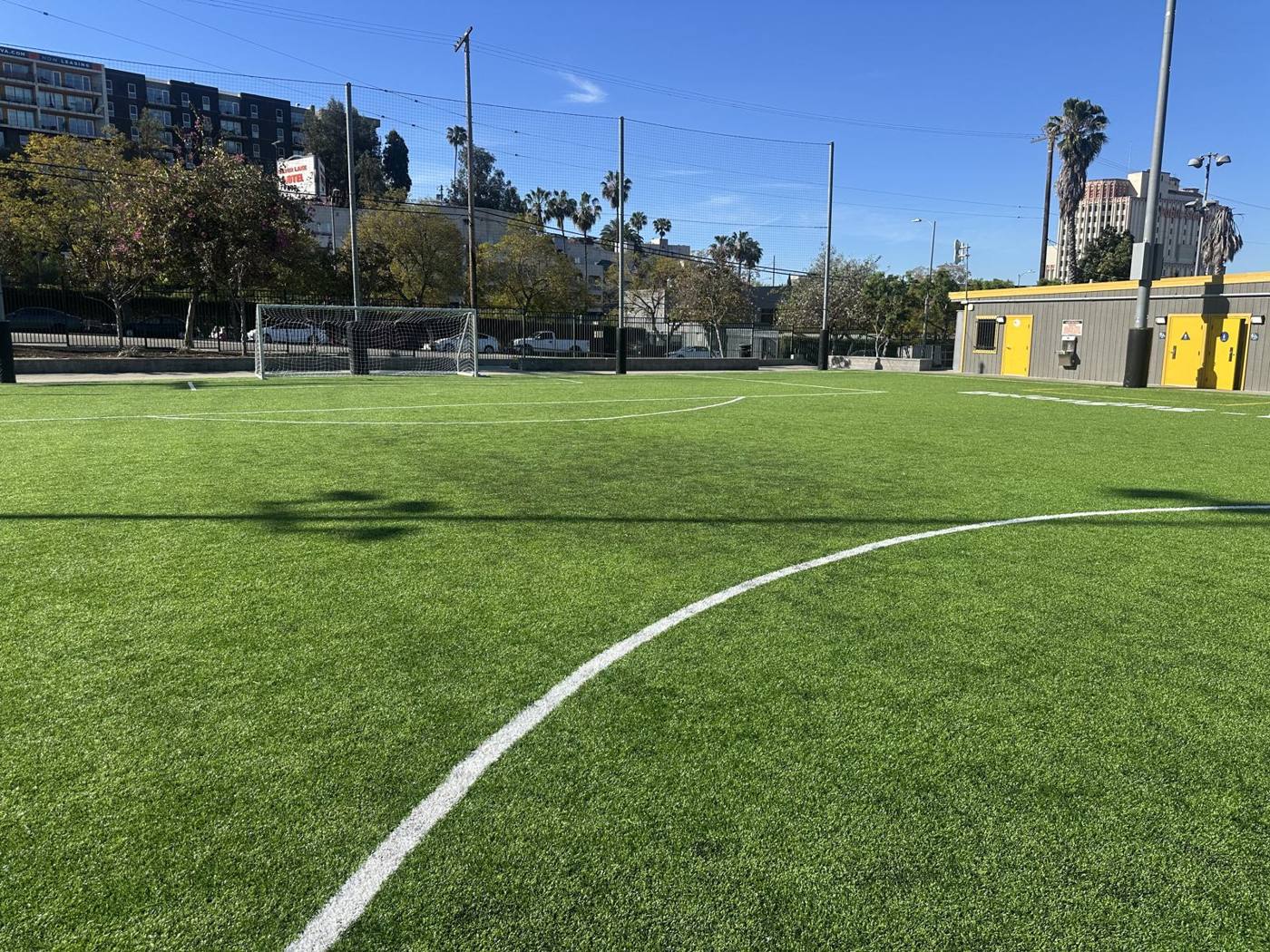
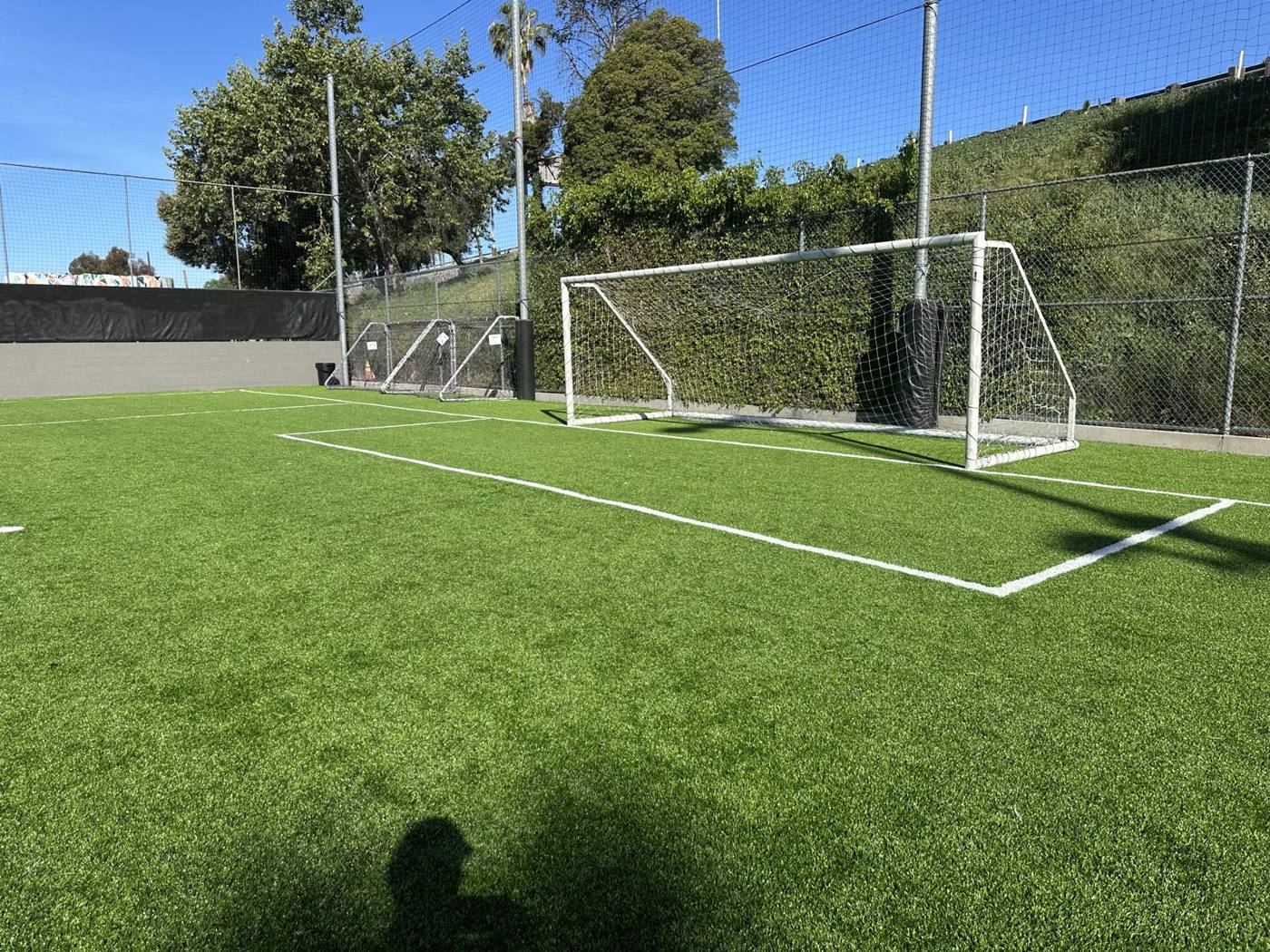
A recent school project, with a 3v3 mini pitch and a 5v5 / 7v7 field. Same crews, same turf and walls we put in backyards.
Wall kits
Wall kits and add-ons
Starting with walls on an existing surface, or adding to a pitch later? Every kit is sized to your layout.
Rebound board kit
Low boards sized to your layout. Great for front yards and younger players.
Priced by layout
Panel wall kit
Rebound panels for wall training on a new or existing surface.
Priced by layout
Cage wall kit
Panels, posts and overhead netting for a fully enclosed pitch.
Priced by layout
Ball-stop netting kit
Posts and netting behind goals or around the full perimeter.
Priced by layout
Who builds it
Built by licensed pros with decades of turf and play space experience.
We represent licensed contractors who have installed artificial turf and creative play areas for kids for decades. Your pitch is built by people who know how to prep a base, manage drainage and design a space where kids can play hard and stay safe.
Installations by Turf Plus Pro, CA State Contractors License #1150527. Meet the team
01
Licensed contractors
Licensed, experienced crews handle the whole build, from site prep to the last wall panel.
02
Decades of turf
Years of artificial turf installs means the base, grading and drainage are done right the first time.
03
Play spaces for kids
Our contractors have spent decades creating play areas for kids, so layouts are planned around how kids actually play.
Who you’ll work with
Meet the team

Steve Ortega
Artificial turf installation, Chino, CA
Steve has more than 30 years of experience installing artificial turf, delivering projects for customers of every size. He leads the installs, from site prep and drainage to the last seam.

Claudia Ortega
Licensed Contractor, CA License #1150527
Claudia holds the California State Contractors License behind every installation, #1150527.

Isaac Rau
Fields Consultant, Soccer Walls and Turf
Isaac helps families plan their pitch, from field size and wall options to netting, lines and lights. Reach him at isaac@minisoccerpitch.com.
Installations by Turf Plus Pro, CA State Contractors License #1150527.
How it works
From yard photos to first game.
01
Send your yard
A few photos and rough measurements are enough to start.
02
Get your layout
We recommend a field size, wall option and add-ons, with a clear price.
03
We build it
Prep, base, turf, walls, netting and lines, handled by our crew.
04
Kick off
First game on day one. We’ll show you how to keep the turf in shape.
FAQ
Questions parents ask
How much space do I need for a backyard pitch?
A 2v2 field works in about 30 × 20 ft, and a 3v3 field fits in roughly 50 × 30 ft. Leave a few extra feet around the edge for walls, netting posts and access. Our field size guide breaks it down by age and format.
Can you build a pitch in a front yard?
Yes. Low rebound boards and clean field lines keep a front yard pitch looking tidy. Check your HOA or city rules first and we’ll design around them.
My yard isn’t a rectangle. Can you still build a pitch?
Yes. Most yards aren’t perfect squares. We fit the turf, walls and lines to your space, including trapezoid lots, angled property lines and L-shaped yards.
Can you build a pitch on a driveway?
Yes. A long, narrow driveway strip makes a great 1v1 and 2v2 lane. We’ll look at the surface and recommend the right base or pad for the turf.
Why do walls matter so much?
They keep the ball in play. Kids stop chasing balls into bushes and the street, get far more touches, and learn to use the wall like a teammate.
Can the pitch be used for other sports?
Yes. Families use their pitches for Wiffle ball, dodgeball, lacrosse, kickball and plenty of made-up games. Walls and netting keep the ball in no matter what you’re playing.
Can you add lights and a scoreboard?
Yes. Lights and a scoreboard are optional add-ons. They can be planned in from the start or added later.
Do I have to get walls and netting?
No. Turf is the base, and walls, netting and field lining are all optional. Plenty of families start with turf and one wall option, then add more later.
Which wall option should I choose?
Rebound boards suit smaller yards and younger kids. Panel walls are best for solo wall training. Cage walls make sense when you want a fully enclosed pitch or need to keep every ball in.
How long does an install take?
It depends on the size of the field and how much site prep the yard needs. You’ll get a timeline along with your quote.
Can you convert an old tennis court or slab?
Often, yes. We’ll look at the surface and drainage and tell you what the conversion takes.
Service area
Backyard soccer pitches across Los Angeles, Orange County, the Inland Empire and San Diego
Our licensed contractors install backyard and front yard soccer pitches across Southern California, including Long Beach, Torrance, Pasadena, Santa Monica, Irvine, Anaheim, Huntington Beach, Newport Beach, Riverside, Temecula, Corona, Carlsbad, Encinitas and Chula Vista.
Outside these areas? Send us your yard details anyway and we’ll let you know what’s possible.
Ready to see your yard as a pitch?
Send a few photos and rough measurements. We’ll come back with a layout, options and a price.